Can you redact documents for a mortgage application?
By RedactSnap ·
Usually not. Mortgage lenders verify income and assets from complete, unaltered documents, and many treat any edited statement as a red flag that can delay or end an application. Instead of redacting, ask the lender how to send documents securely, and explain unusual transactions rather than hiding them.
Why lenders want full documents
Lenders check that the money for your deposit and closing costs is yours, and where large deposits came from. Fannie Mae's guidelines, which most US lenders follow, have called for bank statements that cover two full months of activity. A statement with lines removed can't show that, and underwriters often ask for a fresh copy, or verify accounts directly with the bank.
Altering a document on a mortgage application can also be treated as fraud, even if the intent was privacy.
What you can do instead
- Ask the lender exactly which documents and pages they need, and send only those.
- Ask whether they accept statements with account numbers partly masked, as many bank-issued statements already are.
- Explain large or unusual deposits in a short letter rather than hiding them.
- Upload documents through the lender's secure portal rather than email.
- Ask how long they keep your documents and how they dispose of them.
When redaction is fine
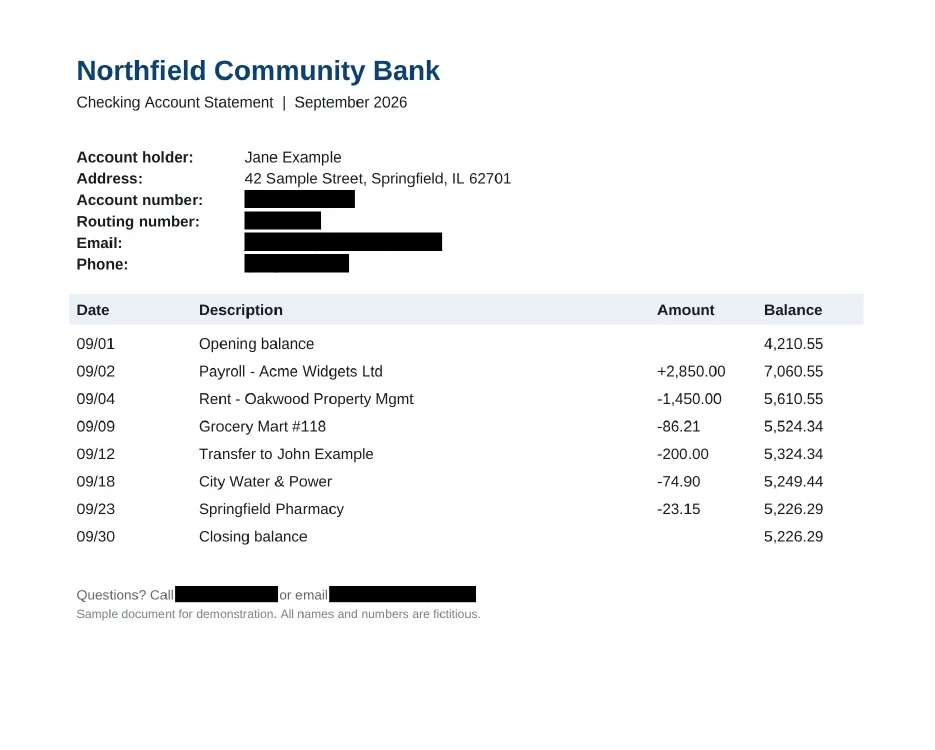
Once a loan has closed, or for anyone who isn't underwriting your loan, such as a landlord, a relative helping with a deposit or an online forum, redacting is sensible. Our bank statement guide shows how.
Try it on your own file
The tool opens PDFs, PNGs and JPGs in your browser. The file is not uploaded.